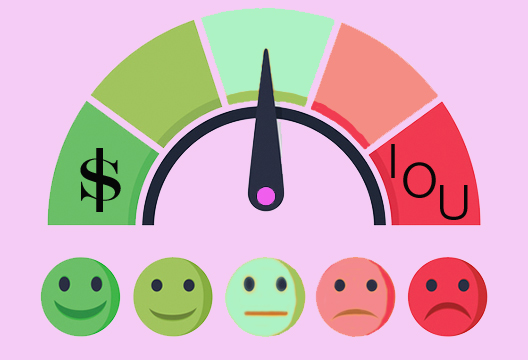
The inequality of wealth distribution among humans has been an issue since the strongest caveman bullied his way to the nicest cave, the prettiest cavewoman and the best piece of mastodon in pre-history, with The trend continuing through thousands of years of masters vs. slaves, lords vs. serfs, nobility vs. peasants and, most recently, business owners vs. workers, But it isn’t just about who has what material objects, as It also affects the quality of life and even how long a person will live.
The Business Dictionary defines poverty as “the condition where people’s basic needs for food, clothing and shelter are not being met”, a status officially shared by between 36 and 43 million Americans in 2024, some 10.6% to 12.9% of the population, depending on which U.S. Census report you look at, but that really is just the tip of the iceberg when you figure in how low the poverty thresholds truly are.
$15,960 for a single person, around $1330 per month, won’t get you much more than housing in most states, and $33,000 for a family of four, about $2750 per month, probably won’t even get you housing, which is why Another 40% of americans are deemed to be just “one paycheck away” from falling into poverty’s lack, even if their paycheck says otherwise.
Not surprisingly, a recent study by the Brookings Institution has shown that these people have life expectancies 10-12 years shorter than their wealthier fellow citizens. And the gap between the “haves” and “have nots” is continuing to grow.
While the median household income was reported to be nearly $84,000 in 2026, the “working poor” have fallen out of the middle class, earning between half and two-thirds of that amount, if not less, and these workers are some of the most essential to daily life, including skilled laborers, medical assistants, factory workers, preschool teachers, retail workers and janitors, but are only earning, on average, between $42,000 and $55,440 per year, pushing them into the lower third of all American wage earners, making them lower income, but not quite poor.
Faring even worse are households earning less than $32,000 a year, who are deemed to be near the poverty level, even when working full-time for minimum wage in their also very essential jobs, including not only hospitality workers, like food servers, short-order cooks, housekeepers, cashiers and desk clerks but also home health aides, childcare workers, farm workers and those in “protective services”, such as lifeguards, ski patrol employees and amusement park attendants.
at the true government poverty level, we have those unfortunate enough to still be working for the federal minimum wage of $7.25 per hour, which earns them $15,080 yr for full-time work, $880 below the line for one person, as well as people who work part-time, and approximately 25% of those who collect social security of any kind, including seniors and the disabled.
By comparison, the base salary of a chief executive officer in 2026 ranged between $726,000 and $916,000 yearly, as reported by Salary.com, with top CEOs earning in excess of $10.5 million per year, while the two companies that employ the most low wage workers, Wal-Mart and McDonald’s, saw profits of $19.5 billion and $8.56 billion, respectively, in 2026, with Wal-mart earning more profit every second ($700) than most of its employees earns in a week.
While Republicans decry spending on welfare programs for the bottom 30% of America’s citizens, it has no problem with supporting entitlement programs for the top 30%, such as the yacht tax deduction, business expense deductions, lower tax rates on capital gains than on earned income and caps on financial transaction sales taxes, among other things.
Their answer for ending poverty and closing the economic inequality gap is to simply offer employees stock options, encourage two parent households and mandate work requirements for those receiving social benefits, even though most recipients are already working, albeit for poverty wages.
Meanwhile, Democrats believe the only way to close the gap and decrease poverty is to raise the minimum wage, eliminate tax breaks for the wealthy, create higher paying jobs through investing in needed infrastructure repairs and green energy, and to encourage profit sharing within businesses, on top of wages, all of which fall short, and don’t really solve the problem.
a higher minimum wage doesn’t help when prices rise along with it, and they most certainly do, particularly the cost of housing, which has reached such ridiculously high levels that anyone earning less than 6 figures is hard pressed to afford any, while automation and ai continues to eat away at many formally middle class occupations, leaving less jobs available than there are workers who need them.
Altho there will always be people who want more than others, everyone who works hard day after day, no matter their occupation, deserves a shot at living their version of the American Dream, or, at least, having their basic needs met, wouldn’t you agree?
if we must insist on keeping this highly disturbing system of class hierarchy, the least we can do is ensure that every class level has access to some decent version of life’s very basic needs – clean water, healthy food, adequate shelter and access to medical care, when needed.
it really is the very least we can do for each other.